

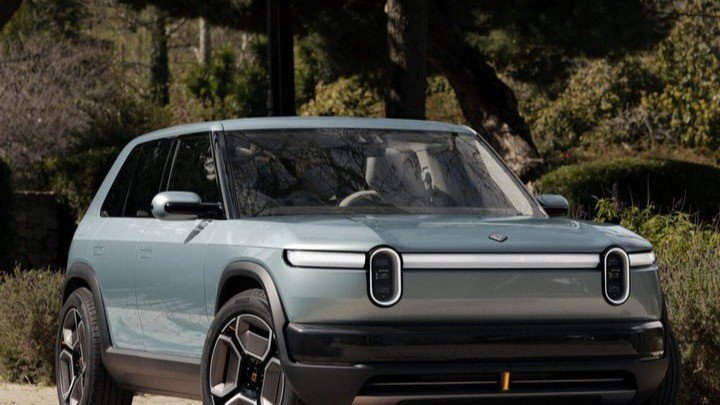
Rivian, the electric car maker, released two new models R2 & R3. On the other page – As you may know not to long ago Apple, the tech giant with secret car ambitions, killed its car project. Many were not even aware that Apple was working on a secret car project. And now before it could get going, it was dead.
I wanna parse these two pieces of information and explore the management decision process that led to product development or no product development. I’m not a representative of either of these companies. Just an observation from public news.
In the case of Rivian, they have a foothold in the market and are trying to firm their stance in the adventure EV market. Their model is packed with impressive features, solid build, and reliable performance. I tried out the R1T model’s impressive towing capability a few months ago. Their models are suited for activities and the new product’s business goal is to expand the target market. With a lower price tag and a small layout, the new model must have a different Product Factor Balance (PFB). For common products, the factors are Cost, Features, Time-to-Market, and Reliability. For the new model, cost is highly prioritized. Closely followed by Time-to-market. Features are limited to reduce the cost. Where does reliability come stacked up in this list? We have to wait and see how the models perform on the road. But the truth is when one factor of PFB is increased, the other has to decrease. Not sure exactly how much. If the learning from previous models is used in product development, then reliability improves while cost is reduced. The reliability target is a delicate one to set. The challenge is for budget-conscious buyers, Reliability expectation is higher. A performance EV with reliability issues might be tolerated as the user drives it infrequently, at extremes, and expects few mishaps. A regular customer would want the car to drive every day to commute, reliability failures are not accepted.
For Apple’s car project, the decision would have been made because the product did not meet any of the firm’s internal goals. Apple is a high-reliability company. They introduce only mature technology into their products and refine the design over and over. To live up to that level of reliability, without damaging the brand value, is a difficult bar to meet. That might be one of the reasons. Another might be the features. The specs of the car are still unknown. Heck, we don’t even know if it is a car or a self-driving robot, or autonomous software. We are not sure what the product was intended to do. But the features form the spine of the product design and they must have evolved. Self-driving cars are in disarray from the slew of regulatory pauses. Electric vehicle manufacturers are struggling to make a profit and thrive. The EV market is facing a slowdown due to reliability issues in cold, charger, and maintenance costs. A wider adoption has decelerated in the last year. Autonomous vehicle software is an unforgiving complicated software development. The hardware needed to pull that off itself is a dedicated reliability program. Coupling that with the software needed to compute & analyze the data opens up more potential for functional failures. All the above might be the reason why this project was canceled. Or it could not even be a technological challenge. It could be a purely business one. Apple is one of the largest market-cap firms. Stockholders need profitable projects and would’ve appreciated the company stretching outside its comfort zone to jump into a cash-burning enterprise. Automobiles, EVs, and Ride-sharing are all low-profit businesses. Product development is driven by business goals. Business goals are in turn driven by market and stockholder needs.
Again, I’m speculating here with my Reliability lens. But there might be a kernel of truth hidden above. You can consider the above factors and explore how they affect your own product.