

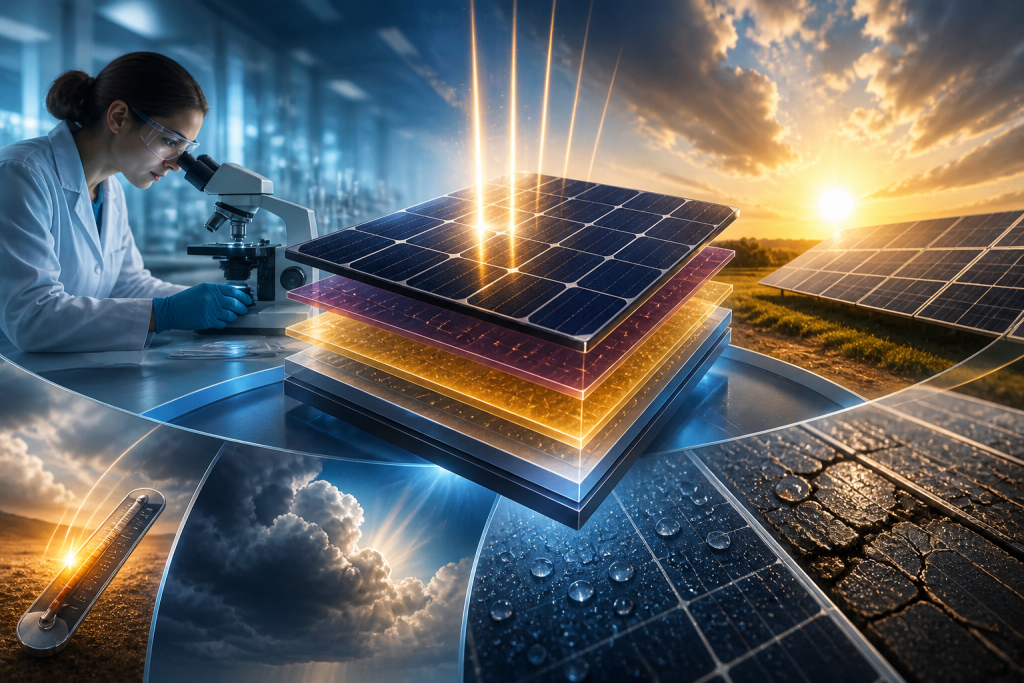
Scientists have pushed past what was believed to be a hard limit in solar cell efficiency.
For years, that limit defined what was considered possible.
Which raises an important question.
What happens when a system exceeds its expected performance?
In controlled conditions, higher efficiency can be demonstrated.
New materials.
Improved structures.
Better energy conversion.
But performance in the lab is only part of the story.
Because real-world use introduces different challenges.
Solar systems operate under:
Changing temperatures.
Variable sunlight conditions.
Long-term material degradation.
Which leads to an important consideration.
Does increased efficiency translate to reliable performance over time?
There is a familiar pattern here.
A breakthrough proves what is possible.
But reliability determines what is usable.
Higher efficiency may improve output.
But if degradation increases,
or performance becomes inconsistent,
the overall system may not improve.
This is similar to product development.
A system can exceed expectations in testing.
But real-world conditions introduce variability.
Which raises another question.
Is the system designed to perform at peak
or designed to perform consistently?
As you think about this development:
How will these materials behave over time?
What failure modes could emerge under real conditions?
How will performance shift outside controlled environments?
Some limits are not just technical.
They are practical.
Breaking a limit is important.
But understanding how that breakthrough holds up
is what determines its impact.