

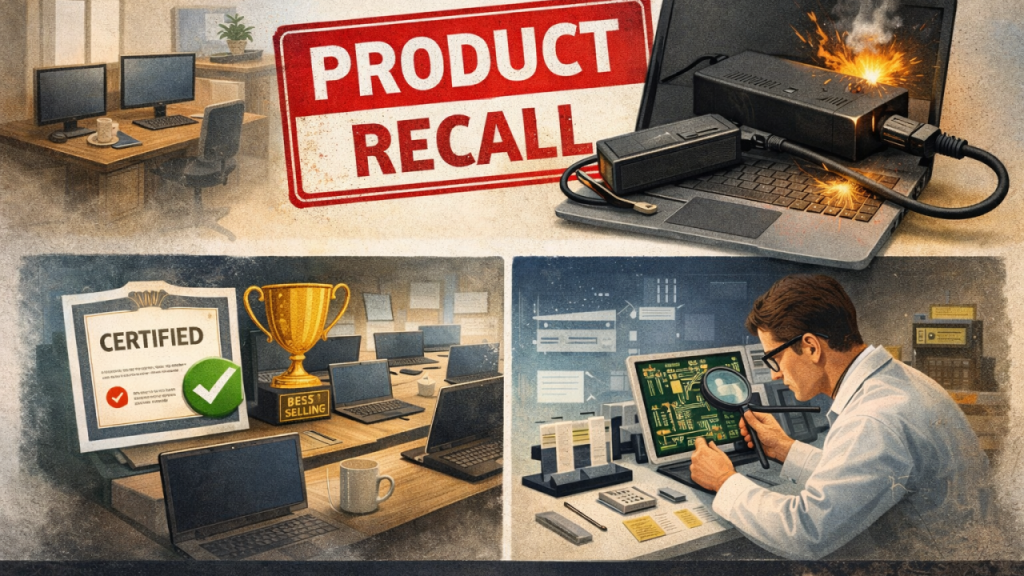
Last week we shared the news that product recalls have increased in the past year in the US. This week it came to light that Dynabook has recalled about 15.5 million Toshiba laptop AC adapters due to fire hazards. (Full CPSC details here).
The product was certified and had market validation. It was widely used in offices and personal spaces. Reliability is often associated with “Certification” and “Market Validation.” These are quick metrics that any customer can evaluate without collecting and analyzing reliability data.
If you see lots of printers from Brand X used by people, then you assume it is widely accepted to buy that brand and therefore reliable. But this shortcut to assess reliability is a misunderstanding.
The product recall notice underscores why customers need to understand the difference between reliability, certification, and popularity. This article clarifies the boundaries of a certified product.
For product designers, a best-selling product can introduce a sense of complacency. This often comes from “if it ain’t broke, don’t fix it” thinking, or simply because teams are too occupied manufacturing more units to meet demand that they haven’t slowed down to think about reliability.
That’s why reliability must be a forethought before any market validation or certification creates bias.
When reliability processes are integrated into the product development cycle, they uncover hidden weaknesses, reduce hazards, increase design margin, and set controls for manufacturing variability.
The result: organizations avoid the dreaded product recall.
– Adam